
Disclosure: This explainer mentions Fixoral, a home-maintenance app built by Lone Cowry Ventures, the East Coast and DC based parent company of Cowry Tech News. It is not an advertisement and contains no paid placement. Fixoral’s description of its assistant connection comes from Lone Cowry, the company behind Fixoral, and CTN has not independently tested it.
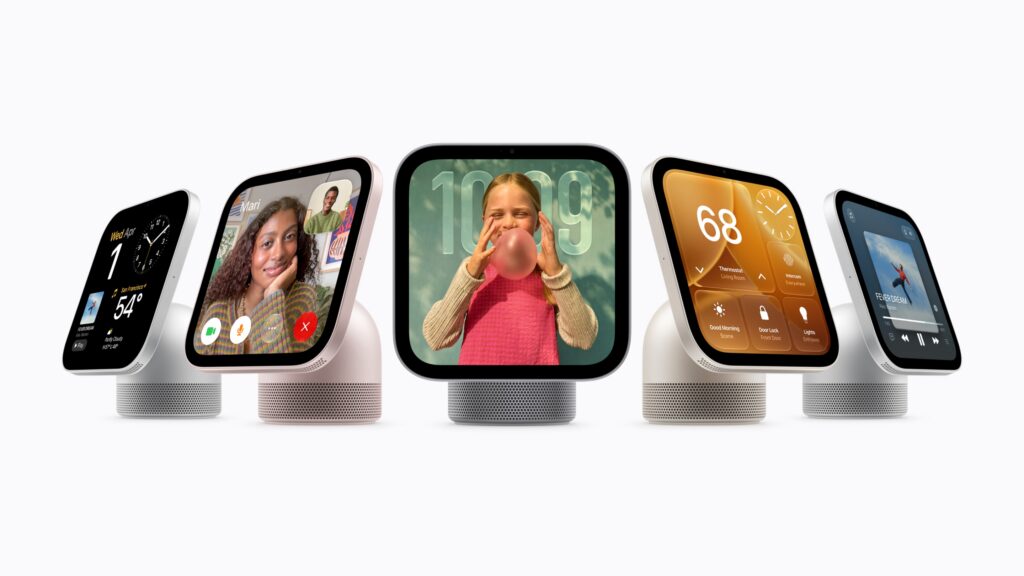
On 13 October Apple announced HomeView, a smart-home hub with a 7-inch display, a speaker base and its new assistant, Siri AI. It costs $299 in the US, comes in a countertop version and a wall-mounted version, and goes on sale on 13 November. Pre-orders opened on announcement day. The details below come from Apple’s Newsroom press release unless marked otherwise. TechCrunch and CNBC reported the same price, screen size and ship date.
What HomeView does
HomeView is meant to sit in a shared room, such as a kitchen or a hallway, and serve everyone in it. Apple says it recognises up to six people by their faces and gives each one their own Home Screen. Once it recognises someone, it can show that person’s Messages, Calendar, Reminders and Find My.
It also controls the home. By touch or by voice, users can view camera feeds, change the thermostat and lights, lock doors and close blinds. Apple says HomeView works with Matter accessories, the cross-brand smart-home standard, and with a new Apple Home Collection of cameras, thermostats and a lock built with LG Electronics and Schneider Electric. Apple’s footnotes say that collection starts arriving in December, with some accessories coming in early 2027.
Then there is Siri AI, which Apple describes as an entirely new version of Siri. Paired with an Apple Intelligence-enabled iPhone or iPad, Apple says, it can draw on a person’s personal context and take actions across apps. A footnote in the release says Siri AI on HomeView is in beta.
Where it is sold
Apple lists the US, the UK, Canada, Australia, New Zealand, India and Singapore. In South Africa, according to the same release, it will be sold through Apple Authorised Resellers from 13 November. It is not on sale in the European Union, because Apple says Siri AI is not currently available in iOS there. The release does not list Nigeria or any other West African country.
What Apple says about privacy
Apple makes three specific claims. Camera and microphone data is processed in what Apple calls Secure Exclaves, separate parts of the A18 chip that Apple says HomeView’s own software, apps, the user and Apple cannot access. Personal content such as Messages appears only when the enrolled person is recognised by face and their paired iPhone or iPad is nearby and recently unlocked. And Siri requests are handled either on the device or in Private Cloud Compute, Apple’s server system, where Apple says data is not stored and is not made accessible to Apple or anyone else.
These are Apple’s design claims. CTN has not tested HomeView, and independent researchers have not yet had a shipping unit to examine.
The questions a home assistant still has to answer
A speaker that sets a timer knows very little about you. An assistant that recognises faces, reads your messages and unlocks the front door knows a lot. That gives any home assistant three questions to answer.
What can it see? HomeView handles faces and personal data for everyone it enrols, not just the person who set it up. Apple’s own footnote says personal information may stay accessible in some cases when the paired phone is off Wi-Fi.
What can it do without asking? Turning on a lamp is low risk. Unlocking a door or changing the heating while the house is empty is not. Buyers should check which actions need confirmation and whether permissions can be set per person.
Where does the data go? Apple’s answer is on the device or Private Cloud Compute. A home that also runs other assistants through Matter will have a different answer for each assistant.
A smaller approach to the same idea
Not every home assistant is a device. Fixoral, the app disclosed above, keeps a home’s maintenance schedule and service records. According to Lone Cowry, the company behind Fixoral, it now lets homeowners reach those records and start a request to a service provider through ChatGPT or Claude. CTN has not independently tested this.
CTN checked fixoral.com on 16 October. Its public pages don’t describe an assistant connection, and its privacy policy says nothing about connections to outside assistants. That leaves the claim resting on the company’s word alone. Fixoral has not announced a partnership with OpenAI or Anthropic, and CTN is not reporting one.
What to watch
HomeView ships on 13 November, and the first independent reviews and privacy tests will follow. Apple Home Collection accessories arrive from December. CTN will update this explainer if Apple changes any of the details above.
Sources
- Apple Newsroom, “Meet Apple HomeView, a new way to enjoy entertainment, stay connected, and manage the home,” 13 Oct 2026: https://www.apple.com/newsroom/2026/10/meet-apple-homeview-a-new-way-to-enjoy-entertainment-and-manage-the-home/
- TechCrunch, 13 Oct 2026: https://techcrunch.com/2026/10/13/apple-makes-another-push-into-the-smart-home-market-with-homeview/
- CNBC, 13 Oct 2026: https://www.cnbc.com/2026/10/13/apple-homeview-smart-home-siri-ai.html
- Apple Support, “Pair and manage your Matter accessories”: https://support.apple.com/en-us/102135
- Fixoral website and privacy policy (checked 16 Oct 2026)